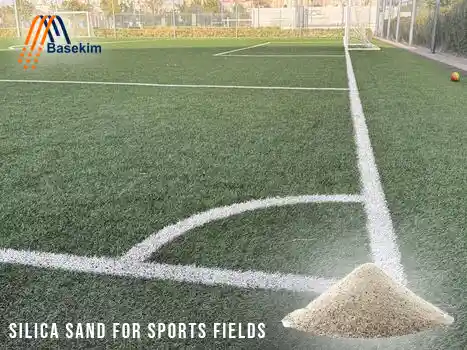
Silica sand for sports fields plays a critical role in building durable, high-performance playing surfaces used across football stadiums, golf courses, and multi-sport complexes. It supports consistent ball behavior, improves drainage, and strengthens turf stability under heavy athletic use.
Modern sports facilities rely on engineered root-zone systems, and silica sand for sports fields has become a core material in achieving long-lasting, professional-grade surfaces that perform in all weather conditions.
Importance of Silica Sand for Sports Fields
The demand for reliable and safe sports surfaces has increased globally. Silica sand for sports fields ensures that turf systems remain stable even under extreme pressure from players and equipment.
It prevents surface compaction, maintains airflow in the root zone, and supports even water distribution. Without it, fields quickly degrade, leading to uneven play and increased maintenance costs.
Physical Properties of Silica Sand for Sports Fields
The performance of sports turf depends heavily on material quality. quartz sand for sports fields is preferred because of its high quartz content, uniform grain size, and excellent structural stability.
Its angular particles lock together efficiently, creating a firm yet flexible surface that supports both natural and hybrid turf systems. This balance improves both player safety and field longevity.
Drainage Efficiency and Water Control
One of the biggest advantages of silica sand for sports fields is its superior drainage capability. Water moves quickly through sand-based systems, preventing puddles and waterlogging.
This ensures that matches continue even after heavy rainfall. Efficient drainage also reduces fungal growth and turf damage, making the surface safer and more consistent year-round.
Surface Stability and Player Traction
Athletes require surfaces that provide both grip and comfort. Silica sand for sports fields enhances traction by stabilizing the turf base while maintaining enough flexibility for natural movement.
This reduces the risk of slipping injuries while allowing controlled speed and agility during high-intensity sports activities.
Application in Football Pitches
Football stadiums demand precise ball roll and consistent footing. Silica sand for sports fields is widely used in both professional and amateur pitches to maintain uniform playing conditions.
It ensures that the surface remains level and responsive, even after repeated matches and training sessions.
Application in Golf Courses
Golf courses rely on precision and surface consistency. quartz sand for sports fields is commonly used in bunkers and drainage layers to maintain smooth playing conditions.
It prevents water accumulation and helps preserve the shape and quality of course features over time.
Application in Tennis Courts
Tennis courts require predictable bounce and stable footing. Silica sand for sports fields helps maintain surface uniformity, especially in artificial turf courts.
It ensures consistent ball response and reduces surface wear in high-traffic zones.
Application in Cricket Fields
Cricket grounds need carefully balanced surfaces for pitch accuracy and outfield performance. quartz sand for sports fields helps stabilize soil layers while improving drainage and turf resilience.
This ensures better match conditions and reduces interruptions due to weather changes.
Installation Methods of Silica Sand for Sports Fields
Proper installation is essential for long-term success. quartz sand for sports fields is applied using two main techniques:
Topdressing spreads a thin layer across the surface to improve leveling and drainage. Sub-base layering integrates sand deeper into the soil profile to strengthen structural stability and root development.
Both methods ensure consistent performance across all sports environments.
Maintenance and Long-Term Benefits
Regular maintenance is easier when using silica sand for sports fields. It reduces soil compaction, improves water infiltration, and minimizes surface damage.
Fields remain playable for longer periods, reducing downtime and lowering long-term maintenance costs for facility operators.
Environmental Performance
Modern sports facilities prioritize sustainability. quartz sand for sports fields is chemically inert, meaning it does not release harmful substances into soil or water systems.
It supports eco-friendly turf construction while maintaining high performance standards across all types of athletic environments.
Common Mistakes in Selection and Use
Many field managers choose incorrect grain sizes or low-quality sand, leading to drainage problems and uneven surfaces.
Selecting high-grade silica sand for sports fields is essential to ensure durability, safety, and consistent playing performance throughout the season.
Quality Standards and Testing for Silica Sand for Sports Fields
Strict industry standards ensure reliable performance. Testing for grain size distribution, hardness, and purity is essential before installation.
More technical standards can be reviewed through ASTM guidelines:
Meeting these standards ensures that silica sand for sports fields performs effectively under professional conditions.
Sourcing and Global Supply
Reliable sourcing is key for large-scale sports projects. High-quality silica sand is supplied globally from regions with rich quartz deposits.
Companies like Basekim provide consistent-grade materials that meet international performance requirements for sports infrastructure projects.
Future Trends in Sports Turf Systems
The future of silica sand for sports fields includes improved particle engineering, hybrid turf integration, and eco-optimized blends.
These innovations aim to enhance durability, reduce maintenance needs, and support more sustainable sports infrastructure worldwide.
Frequently Asked Questions about Silica Sand for Sports Fields
1. Why is silica used in sports fields?
It improves drainage, stability, and overall playing performance.
2. How does sand improve turf systems?
It prevents compaction and supports healthy root growth.
3. Is it suitable for all weather conditions?
Yes, it performs well in both wet and dry climates.
4. How long does it last in a sports field?
It lasts many years with proper maintenance and occasional topdressing.
5. Does it affect player safety?
Yes, positively—it improves traction and reduces uneven surfaces.
6. Is it environmentally safe?
Yes, it is chemically stable and environmentally friendly.
Conclusion of Silica Sand for Sports Fields
High-quality silica sand is essential for modern athletic infrastructure. It enhances drainage, improves stability, and ensures consistent performance across football, golf, tennis, and cricket surfaces.
With proper installation and maintenance, it significantly extends turf life and reduces operational costs, making it a smart investment for any sports facility aiming for long-term excellence