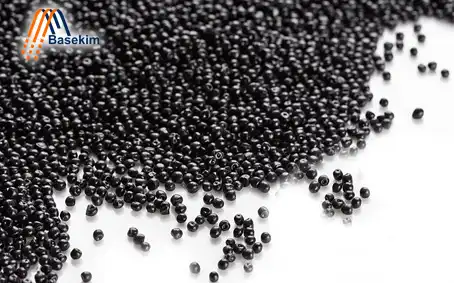
Specialty carbon black plays a critical role in modern manufacturing, offering far more than just pigmentation. While many people associate carbon black with simple black coloring, specialty grades provide enhanced performance characteristics such as conductivity, UV protection, and durability. Industries ranging from automotive to electronics rely heavily on this advanced material to improve product quality and functionality.
In this article, you’ll explore everything you need to know about specialty carbon black, including its properties, production methods, applications, and how suppliers like Basekim support global industries with high quality carbon black solutions.
What Is Specialty Carbon Black?
Specialty carbon black is a refined form of carbon produced through controlled combustion or thermal decomposition of hydrocarbons. Unlike standard carbon black used mainly in tires, Performance carbon black focuses on performance rather than bulk reinforcement.
Manufacturers design these materials with precise particle size, structure, and surface chemistry. This level of control allows companies to tailor carbon black for specific uses such as:
Electrical conductivity
UV resistance
Color consistency
Mechanical reinforcement
Thermal stability
Because of these enhanced features, Performance carbon black often commands higher value in the market compared to commodity grades.
Key Properties of Specialty Carbon Black
1. Particle Size and Surface Area
Smaller particle sizes increase surface area, which enhances color depth and conductivity. Performance carbon black often features ultra-fine particles for superior dispersion and performance.
2. Structure
Structure refers to how carbon particles aggregate. High-structure carbon black improves conductivity and mechanical strength, making it ideal for plastics and coatings.
3. Surface Chemistry
Manufacturers modify the surface to improve compatibility with different materials like polymers, inks, and coatings.
4. Electrical Conductivity
Certain grades of Advanced carbon black conduct electricity, which is essential for applications like batteries, cables, and antistatic packaging.
5. UV Protection
Specialty carbon black absorbs ultraviolet radiation, preventing degradation in plastics and coatings exposed to sunlight.
Production Process of Specialty Carbon Black
Producers use several methods to create Performance carbon black, but the most common include:
Furnace Black Process
This method burns hydrocarbons in a controlled environment. By adjusting temperature and oxygen levels, manufacturers can control particle size and structure.
Thermal Black Process
This process uses heat instead of combustion, producing larger particle sizes with lower structure. It is often used for rubber and elastomer applications.
Acetylene Black Process
This method produces highly conductive carbon black used in batteries and electronic components.
Each process creates a unique type of carbon black suited for specific industrial needs.
Applications of Specialty Carbon Black
Specialty carbon black serves a wide range of industries due to its versatile properties.
1. Plastics Industry
Manufacturers use Performance carbon black in plastics to improve:
UV resistance
Electrical conductivity
Color uniformity
It is commonly found in automotive parts, packaging materials, and construction products.
2. Coatings and Paints
In coatings, Performance carbon black provides:
Deep black pigmentation
Weather resistance
Enhanced durability
It is widely used in automotive coatings, industrial paints, and architectural finishes.
3. Printing Inks
High quality inks rely on Performance carbon black for:
Rich color depth
Consistent dispersion
Improved print quality
This is essential for packaging, newspapers, and high end printing applications.
4. Electronics and Batteries
Conductive grades of Performance carbon black are critical in:
Lithium ion batteries
Semiconductors
Cable shielding
They enhance energy efficiency and electrical performance.
5. Rubber and Elastomers
Although standard carbon black dominates this sector, specialty grades are used for high performance rubber products requiring:
Enhanced strength
Better wear resistance
Improved thermal stability
Why Performance carbon black Matters
Specialty carbon black is not just an additive it is a performance enhancer. Without it, many modern products would lack durability, conductivity, or visual appeal.
For example:
Electric vehicles rely on conductive carbon black in batteries
Outdoor plastics depend on UV-resistant carbon black to prevent degradation
Packaging materials use antistatic carbon black to protect sensitive electronics
Its importance continues to grow as industries demand higher performance materials.
Market Trends in Specialty Carbon Black
The specialty carbon black market is evolving rapidly due to technological advancements and sustainability goals.
Growing Demand in Electronics
With the rise of electric vehicles and renewable energy, demand for conductive carbon black is increasing significantly.
Sustainability Focus
Manufacturers are developing eco-friendly production methods and recycling technologies to reduce environmental impact.
Advanced Material Development
New formulations are being designed to meet the needs of cutting-edge industries such as aerospace and nanotechnology.
Choosing the Right Specialty Carbon Black Supplier
Selecting a reliable supplier is crucial for ensuring consistent quality and performance. Factors to consider include:
Product range
Technical support
Quality control standards
Global distribution capabilities
Companies like Basekim provide a wide variety of Performance carbon black grades tailored to different industrial needs. Their expertise helps manufacturers select the right material for specific applications, ensuring optimal results.
Benefits of Working with a Trusted Supplier
Partnering with an experienced supplier offers several advantages:
Consistent Quality
High-quality specialty carbon black ensures uniform performance across production batches.
Technical Expertise
Suppliers provide guidance on selecting the right grade and optimizing formulations.
Reliable Supply Chain
A strong distribution network ensures timely delivery and reduces production delays.
Custom Solutions
Some suppliers offer tailored carbon black solutions to meet unique industry requirements.
Challenges in Specialty Carbon Black Usage
Despite its advantages, Performance carbon black comes with certain challenges:
Dispersion Issues
Achieving uniform dispersion in polymers and coatings can be difficult without proper processing techniques.
Cost Considerations
Specialty grades are more expensive than standard carbon black, which may impact production costs.
Environmental Concerns
Carbon black production can have environmental impacts, leading to stricter regulations and the need for sustainable practices.
Future of
Performance carbon black
The future of Performance carbon black looks promising as industries continue to innovate. Key developments include:
Nanotechnology Integration
Advanced carbon black materials are being developed at the nanoscale for enhanced performance.
Green Manufacturing
Eco-friendly production processes are becoming a priority to reduce emissions and waste.
Expanding Applications
New uses in medical devices, wearable technology, and smart materials are emerging.
Conclusion
Specialty carbon black is a vital material that enhances the performance, durability, and functionality of countless products. From plastics and coatings to electronics and batteries, its impact spans multiple industries.
As demand continues to grow, choosing the right supplier becomes increasingly important. Companies like Basekim play a key role in delivering high-quality specialty carbon black solutions tailored to modern industrial needs.
By understanding its properties, applications, and market trends, businesses can leverage Performance carbon black to stay competitive and innovative in an ever-evolving marketplace